The History of the Baguette in Five Turning Points
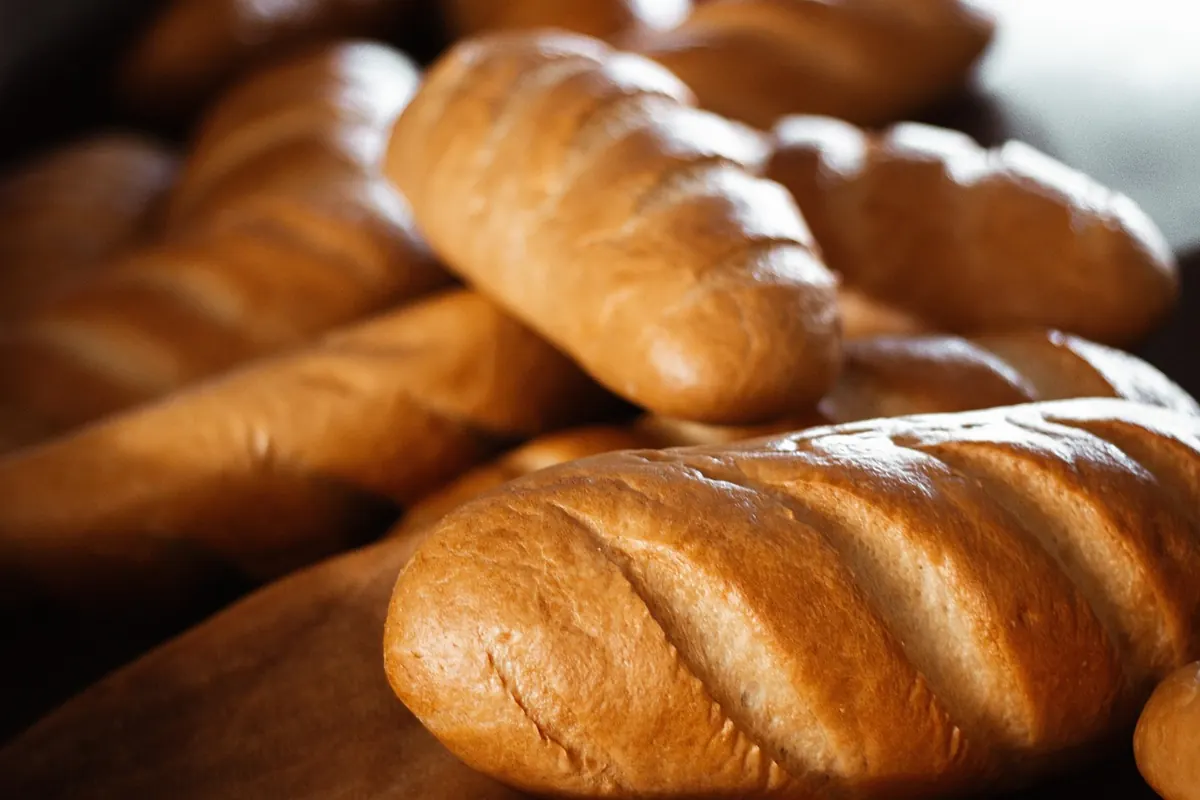
At six in the morning a Paris street smells of bread and diesel, and the queue outside the bakery moves slowly. It is easy to assume the baguette has always been there, as fixed as the curb. It has not. The loaf is younger than the restaurant, younger than the potato on European tables, and it has no inventor and no birthday. What it has is a history — a sequence of practical decisions about ovens, flour, working hours and money — and a thick layer of legend on top. Five moments explain most of how the baguette came to look and taste the way it does.
1839: Steam Comes to Paris from Vienna
For most of European history a loaf was round or a thick oval. Big bread keeps better, feeds a household and behaves well in a wood-fired oven. Paris did have long breads — the pain long appears in descriptions of the city's baking long before anyone said "baguette" — but a thin loaf was hard to bake well in a dry oven. The crust sets within minutes, and the inside then has nowhere to go. You get a tight, tough crumb under a pale shell.
The change came with steam. In 1839 a Vienna-born baker named August Zang opened the Boulangerie Viennoise on the rue de Richelieu, selling Viennese breads and pastries — and with them the Viennese oven, which injected steam into the baking chamber. Steam keeps the surface of the dough soft and flexible for the first minutes of baking, so the loaf can open and expand; then it clears, and the crust sets thin, glossy and brittle.
That is the technical foundation of the baguette: an extensible dough, shaped long, baked in a steamy oven. Everything since has been a variation on it.
The Late Nineteenth Century: A Long Loaf for a Growing City
Two more things had to happen. Flour improved. From the 1870s onward, roller mills — first in Hungary and Austria, then across Europe — produced whiter, more consistent flour than stone mills, and millers learned to select wheat with stronger gluten. A dough that can be stretched to sixty centimetres and still hold its shape needs that strength.
The city changed too. Paris grew, and its bakeries baked twice a day, early morning and again in the afternoon. A long, thin loaf bakes quickly and evenly; it suits a shop that sells bread on a constant rhythm rather than once a week for a whole village.
By the end of the century the long loaf was a Paris signature. It carried several names — pain long, flûte, ficelle for the thin one — and the word baguette, which had meant a rod or a wand, only attached itself to bread in the early twentieth century.
The myths arrive at this point. Napoleon is said to have ordered long loaves so his soldiers could carry them in their trousers; there is no evidence for it. Another story says bakers made bread long so workers would not need knives. That has no documentary support either. Good stories, thin files.
The 1920s: The Night-Work Story and What It Misses
The most persistent origin story says a French law in the 1920s stopped bakers from starting work before four in the morning, so they needed a loaf that could be made quickly, and the baguette was born.
The regulation is real; the conclusion is not. French labour rules of the early twentieth century — the eight-hour day and the decrees that followed it — did cut into the baker's night. That mattered, because baking has always been a night trade, and any limit on night hours forces a shop to reorganise.
But the timing does not fit. Long loaves were established in Paris decades earlier. And shaping a baguette is not faster than shaping a round loaf — it is more demanding. What actually changed in the 1920s and 1930s was fermentation and equipment: mechanical dividers, more consistent commercial yeast, shorter rests between shaping and baking. The baguette fitted that faster rhythm. It did not come out of a law.
The Post-War Years: The Baguette Becomes Ordinary
After 1945 bread in France slipped from a staple to an afterthought. Villages emptied, small bakeries closed, households bought less bread. Industrial bakeries filled the gap with a loaf that looked like a baguette and behaved like a pillow: flour, water, yeast, plus ascorbic acid, emulsifiers and enzymes to make the dough forgiving, and often part-baked frozen dough shipped out to be finished on site.
The result was cheap, uniform and soft, with a crust that bent instead of shattering. It stayed edible for a day because it was designed to. For a generation of shoppers, that was simply what a baguette was.
The cost was flavour. Fast fermentation with additives gives a bland crumb and a pale, leathery crust; the long slow rising that builds aroma and an open, creamy interior disappeared from most of the market. By the 1970s, bakers still working with leaven and long rests were unusual enough to be written about.
1993: The Décret Pain Draws a Line
France's response came in 1993, with a decree that still shapes how baguettes are sold. It defined two labels, and one of them matters far more than the other: pain de tradition française, sold in most shops as a "tradition" or baguette de tradition.
To carry that name the bread must be made from flour, water, salt and yeast or leaven, with no additives and no improvers, and it may not be made from frozen dough. Fermentation, shaping and baking happen from scratch in the shop. It is a legal definition, not a guarantee — a badly made tradition baguette exists — but it gives the buyer a term to look for and gives the baker a reason to keep the slower method alive. The companion label, pain maison, is looser: the bread must be kneaded, shaped and baked on the premises, and additives are permitted.
In late 2022 UNESCO added the artisanal know-how and culture of baguette bread to its list of intangible cultural heritage. The wording is telling. What was recognised was not a shape but a daily practice: the shaping, the scoring, the early start, the twice-daily bake.
Buying and Keeping One
A few things worth checking, whether you are in Paris or in a bakery on the other side of the world:
- Listen to the crust. Press the loaf lightly; a good baguette crackles. Silence usually means it has spent time in a plastic bag or was baked with improvers.
- Read the cuts. Five to seven diagonal slashes should have opened into a visible lip, with dough pushing up through them. Flat, closed cuts point to under-proofed dough or an oven without steam.
- Squeeze the crumb. It should be creamy, with irregular holes, and should spring back. A chalky, tight crumb is a fast-fermentation loaf.
- Weigh it in your hand. A standard baguette is roughly 250 grams and feels heavier than it looks. If it seems to weigh nothing, it is mostly air and crust.
- Eat it the same day. A baguette is not built to keep. Five minutes in a hot oven, sprinkled with water, revives a stale one; after that, slice it and freeze it.
And if the shop bakes twice a day, ask what time the second bake comes out. Standing there at the right moment is the cheapest improvement you will make to your bread all year.
Photo: dimkatomson21 / Pixabay